
About Us
The Milky Brother Foundation focuses on fostering cultural dialogue in Eastern Europe. Drawing on personal experience and using the language of art, we seek universal ways of telling stories about the diversity and multilayered nature of the world around us. Literature, film, painting, sculpture, photography, as well as research and educational activities, constitute both the fields and the forms through which we speak about shared values and promote multiculturalism by shaping relationships between creators and proactive audiences.
We produce films, translate and publish contemporary Armenian literature, and organize workshops, exhibitions, debates, art auctions, and other socio-artistic projects. At the core of our foundation’s mission lies the development of Polish – Armenianrelations and the preservation of the cultural heritage of Polish Armenians.
Over the past ten years, we have collaborated with numerous institutions, including the Ministry of the Interior and Administration of Poland (Department for National Minorities), the JuliuszMieroszewski Centre for Dialogue, the City of Gdańsk, the Ministry of Culture and National Heritage of Poland, the Ministry of Culture of the Republic of Armenia, the Research Centre for Armenian Culture in Poland at the Polish Academy of Arts and Sciences (Kraków), the Białystok Cultural Centre, the History Meeting House in Warsaw, the National Library of Poland, the MesropMashtotsMatenadaran – Research Institute of Ancient Manuscripts, and the Embassy of the Republic of Poland in Yerevan, among others.
To date, we have completed three joint Polish–Armenian film projects. We brought to life the first Polish–Armenian short feature film entitled Milk Brother (as screenwriters and director), which directly inspired the name of our Foundation.
The dream of producing a Polish–Armenian film had matured long before us. In 1967, Jerzy Kawalerowicz, the distinguished film director of Armenian descent, visited Armenia for the first time together with his wife, LucynaWinnicka. During this visit, preliminary arrangements were made for a joint production, which on the Armenian side was to involve KostanZaryan, Arno Babajanian, and MartirosSaryan. Unfortunately, the project was never realised.
Another significant episode is linked to the visit of the Polish Armenian writer Andrzej Mandalian to Yerevan. He accepted an offer to work on the screenplay for a joint film project. The story was to begin with Ewa, a young doctoral student at the Warsaw Conservatory, who discovers in Fryderyk Chopin’s diaries a mention of a lost mazurka composed by his exceptionally talented Armenian pupil, Karol Mikuli. Her search for Mikuli’s mazurka leads her to Lviv and then to Etchmiadzin. The film was to be directed by LaertVagharshyan. However, during the Soviet period, international co-productions were extremely complicated and required approval from Moscow. Nearly half a century had to pass before the idea of Polish–Armenian film cooperation, envisioned by our talented predecessors, was finally fulfilled. This became possible with the production in 2014 of the first joint films: the feature Milk Brother and the documentary The Shepherd’s Song.
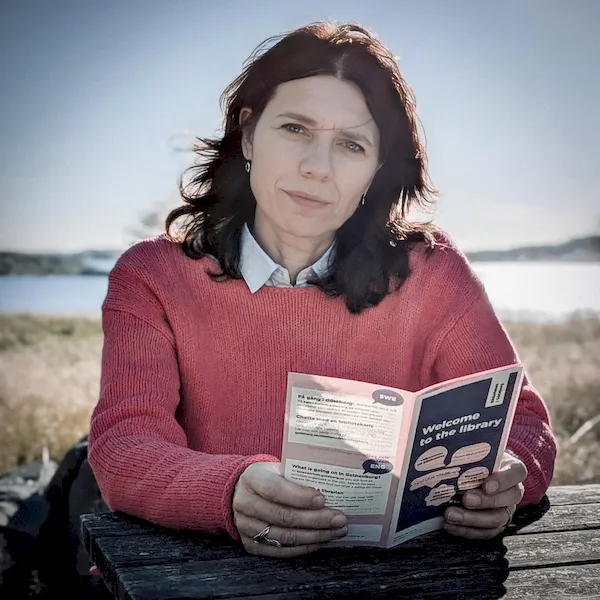
Aleksandra Majdzińska is a writer, screenwriter, translator, and project coordinator. She has taught Polish language in Eastern Europe for many years, working in Yerevan and Odesa, and co-founded Polish language departments at the Linguistic University and at Yerevan State University.
Deeply connected to Armenia and the broader East — a bond clearly reflected in her books Morkut and Shalom, Bonjour Odessa — she explores themes of memory, identity, and multicultural experience.
She is the recipient of the Marek Nowakowski Literary Award (granted by the National Library of Poland) and the Bydgoszcz Literary Award of the Year “Female Archer`s Arrow” (Strzała Łuczniczki)
She serves as President of the Milky Brother Foundation.
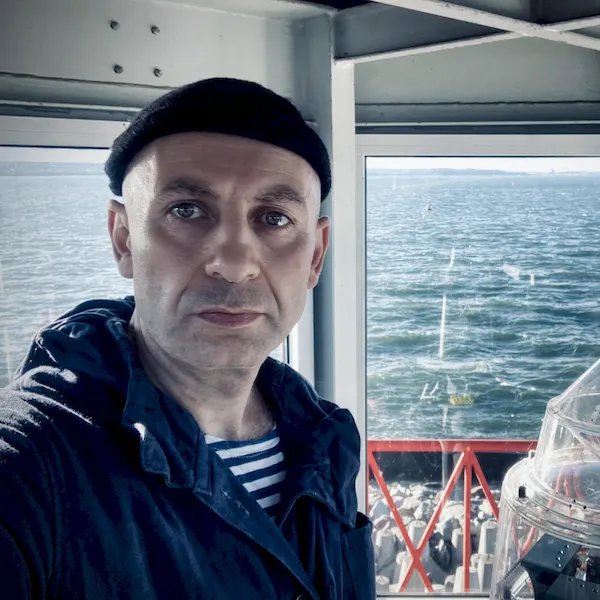
Vahram Mkhitaryan is a director, photographer, screenwriter, and translator. He serves as Vice-President of the Milk Brother Foundation and is responsible for its audiovisual projects, including the production of documentary films.
He is the director of award-winning films recognized in Poland and internationally, including the feature Milk Brother (produced by Studio Munka of the Polish Filmmakers Association) and the documentary The Shepherd’s Song (produced by Wajda Studio).
He is an Assistant Professor at the Faculty of Sculpture and Intermedia at the Academy of Fine Arts in Gdańsk, within the Photography Department, and Head of the Interdepartmental Chair of Small Film and Video Forms.
He is a member of the Board of the Directors’ Section of the Polish Filmmakers Association and a co-founding member of the Tricity Branch of the Association.
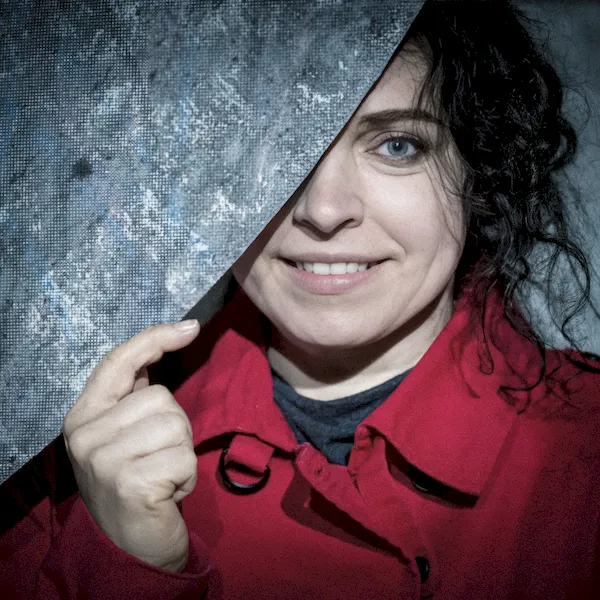
Adriana Majdzińska is a sculptor engaged in drawing, artistic actions, and social initiatives.
In 2000, she graduated from the Faculty of Sculpture at the Academy of Fine Arts in Gdańsk, where she studied in the studio of Professor Sławoj Ostrowski. Since 2006, she has been professionally affiliated with her alma mater, and in 2019 she was awarded the title of professor at the same institution.
She is a co-founder and coordinator of WL4 Art Space. In her artistic practice, she is particularly interested in spatial form in its classical understanding. She works primarily in wood, while also employing metal, stone, concrete, and ceramics.
Among the series she has created are Seven Deadly Sins (2000), Militaria (2002), Reliquaries (2011), Natural Killers (2021), con/Temporary (2021), and many others.
Her works have been presented in more than a dozen solo exhibitions and over seventy group exhibitions. She is also the author of large-scale works installed in public spaces.